This page will be updated every month, so check back periodically for the latest books.
The current book is: The Jungle: The Uncensored Original Edition, by Upton Sinclair.
Past and future books include:
- Nutrition and Physical Degeneration, by Weston A. Price: Rather that theorizing abstractly about human nutrition, the author sought out isolated groups of healthy people around the world (this was in the 1930s, when there were still isolated groups of people), and documented their foodways. Price's book is jaw-dropping (literally). He describes group after group of people who are healthy in isolation, and become sick, miserable, and toothless when they adopt a "modern" diet. Aren't you curious what they were eating when they were healthy?
- Goat Song, by Brad Kessler
- Ripe: The Search for the Perfect Tomato, by Arthur Allen
- The Town That Food Saved, by Ben Hewitt
- The Vegetarian Myth: Food, Justice, and Sustainability, by Lierre Keith: An important book for everyone to read—but especially for folks who think they know something about food sustainability. Makes a very compelling case for eating local and against eating grains. Huh? Click here for my full review.
- Waste: Uncovering the Global Food Scandal, by Tristram Stuart: A very thorough overview of the ways in which we waste food. A discussion of the global implications of food waste. Suggestions for solutions, some more practical than others.
- Appetite for Change: How the Counterculture Took on the Food Industry, by Warren James Belasco: A great cultural chronicle, documenting the beginnings of the modern food consciousness movement in the US and its face-off with the establishment, especially in the arenas of advertising and marketing.
- Sweetness and Power: The Place of Sugar in Modern History, by Sidney W. Mintz: A history of sugar throughout the ages, with a decided socio-political slant. (Mintz does not discuss sugar's impact on health at all.)
- Eating Animals, by Jonathan Saffran Foer: An excellent book that treats the question of eating animals in a nuanced manner, going beyond previous books on the subject. Foer's lovely writing makes it a great read.
- Just Food: Where Locavores Get It Wrong And How We Can Truly Eat Responsibly, by James E. McWilliams: The book presents some good ideas, but is weakened by arrogance and less-than-thorough analyses. His critique of locavorism is ultimately incomplete and flawed. Click here for my full review.
- Farm City: The Education of an Urban Farmer, by Novella Carpenter: A post-hippie in inner-city Oakland, California raises ever-larger farm animals on a vacant lot behind her apartment. Reflections about what it means to raise animals, feed them using (mostly) available materials, and slaughter and eat them in the middle of a dense city.
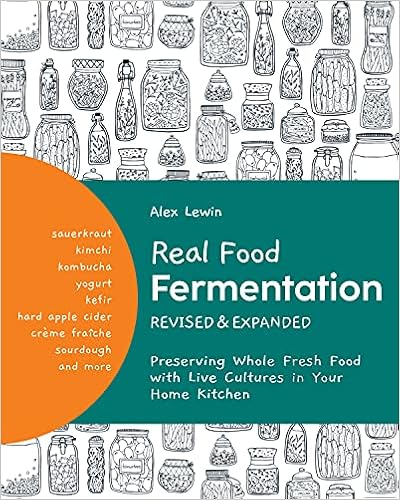
- Wild Fermentation, by Sandor Ellix Katz: A masterwork on the subject of fermentation, including but not limited to lactofermentation of vegetables. If you are interested in fermenting and the theory behind it, get this book. Sandor Ellix Katz's intelligence and humanity make it a joy to read.
- The Food of a Younger Land: A Portrait of American Food—Before the National Highway System, Before Chain Restaurants, and Before Frozen Food, When the Nation's Food Was Seasonal, by Mark Kurlansky: In the 1930s, the Federal Writers Project, part of the Works Progress Administration, initiated a project documenting American (United Statesian) foodways, with the goal of compiling the writing into a book entitled America Eats. This work was interrupted by World War II, and never completed. Kurlansky has compiled a selection of this material, and provided it some context and structure. A must-read for anyone interested in food history and/or Americana. And gosh, they ate a lot of beans back then.
- Inquiries into the Nature of Slow Money: Investing as if Food, Farms, and Fertility Mattered, by Woody Tasch, with a foreword by Carlo Petrini
- All New Square Foot Gardening, by Mel Bartholomew: A fresh (ahem) look at how to do raised-bed container gardening at home. Mel has thought of nearly everything, and imposed some kind of order on it or created a system to regularize it. Some of the systems are insightful and some are essentially arbitrary; he leaves very little to chance, and he thinks that this orderliness will make it easier for beginners to grow things. Some gardeners will love this and some will hate it, but regardless, his approach sounds like an effective way to get a large yield from a small plot.
- Milk: The Surprising Story of Milk Through the Ages, by Anne Mendelson: (from sleeve) "Part cookbook—with more than 120 enticing recipes—part culinary history, part inquiry into the evolution of an industry…" I agree with the sleeve's assessment. The book is part history of milk, part how-to manual for everything you might want to do with milk. And you won't know that you want to do most of these things until you read the book! Mendelson is erudite, thorough, and amusing. Definitely recommended.
- Hope's Edge: The Next Diet for a Small Planet, by Frances Moore Lappé and Anna Lappé: Mind-opening, paradigm-shifting, and wise, while at the same time very personal. A look at food issues in several places in the world; their inseparability from economic and social justice issues; and how the keys to resolving these issues lie in how we each look at the world and at our lives. I wish I had written this book!
- Black Gold, directed by Marc Francis and Nick Francis: A documentary film providing insight into the coffee trade, and some of the lives affected by it.
- The Coffee Book: Anatomy of an Industry from Crop to the Last Drop, by Gregory Dicum and Nina Luttinger: A big-picture look at the history, economics, and ethics of coffee.
- A Cafecito Story, by Julia Alvarez, Bill Eichner, and Belkis Ramirez
- Closing the Food Gap: Resetting the Table in the Land of Plenty, by Mark Winne: A passionate and cogent look at food justice in low-income urban areas of the US. Winne's years of experience give him a very nuanced understanding of the field, along with a healthy appreciation of the challenges facing us, as a society, going forwards.
- Nourishing Traditions: The Cookbook that Challenges Politically Correct Nutrition and the Diet Dictocrats, by Sally Fallon: This is one of two books I've read recently that has had the greatest impact on me. (The other was The Revolution Will Not Be Microwaved.) Fallon's first chapter is the clearest, most comprehensive, and best-documented writing about human nutrition that I've ever read. Furthermore, it disagrees with most of what the USDA and other "authorities" have been telling us for the last 30 years. And it is utterly convincing. If that weren't enough, the rest of the book is a splendid cookbook. READ THIS BOOK!
- Manifestos on the Future of Food and Seed, edited by Vandana Shiva: An inspiring collection of essays on the subject of food justice on the global stage. If you have any doubt that we are in the midst of a world-wide culture war, fighting for our freedom to feed ourselves as we see fit, read about it here.
- The Fruit Hunters: A Story of Nature, Adventure, Commerce, and Obsession, by Adam Leith Gollner: An offbeat, aptly-named book on the history of the human relationship to fruit, documenting the author's adventures as he travels around the world in search of unique fruit experiences.
- Bottomfeeder: How to Eat Ethically in a World of Vanishing Seafood, by Taras Grescoe: The best book I've seen on the subject of the health and environmental complexities of eating animals from the water. If you are interested in food sustainability, it's definitely important to read this.
- The Botany of Desire: A Plant's-Eye View of the World, by Michael Pollan: Eye-opening case studies of the history of our relationships to four specific plants. Great to read.
- The Revolution Will Not Be Microwaved: Inside America's Underground Food Movements, by Sandor Ellix Katz: "The personal is political", in the context of food. A sobering and inspiring book about food movements, infused lovingly throughout with the author's feelings about food. This is one of the most powerful books I've read on any subject. It's a great book for anyone saying, "Who cares what we eat," and it's just as good a book for folks who know that they care intensely.
- Animal, Vegetable, Miracle: A Year of Food Life, by Barbara Kingsolver: A thoughtful and lyrical journal of the author's year of eating locally, including what worked and what didn't, interwoven with a turkey love story (sort of!).