Folks,
This past weekend, I attended the Fourfold Path to Healing Conference in Westford, MA. I heard about the conference last week when I attended
a dinner at Haley House at which Sally Fallon was the featured speaker. I'm very glad I went.
The Fourfold Path to Healing is the name of a book co-authored by Tom Cowan,
a San Francisco-based MD; Sally Fallon, president of the
Weston A. Price Foundation; and Jaimen McMillan, creator of
Spacial Dynamics. All three authors were at the conference, along with perhaps 200 attendees and 10 or so vendors.
Each author presented to one
tutti session; for the rest of the weekend, all three presented simultaneously in different rooms. I won't say much about Jaimen's work here, because I didn't go to any of his individual sessions—I was too interested in what Tom Cowan and Sally Fallon had to say. You can read about Jaimen's work
in the book or
on his website.
As a starting point, I'll say that
Rudolf Steiner's work has provided a grounding for much of Tom, Sally, and Jaimen's thinking. Steiner is well-known in some (small) circles for having founded the biodynamic agriculture movement. Biodynamic agriculture is sort of like organic agriculture on steroids (!). Beyond that, Steiner founded several other movements, including anthroposophical medicine, a holistic paradigm which is part of Tom's practice; and Eurythmy, a movement system that informs Jaimen's work.
Weston A. Price has been another inspiration to Tom and Sally, particlarly his 1939 book,
Nutrition and Physical Degeneration. In fact, he has been enough of an inspiration to them that they have started the
Weston A. Price Foundation, of which Sally is the president and Tom is a founding board member.
In his book, Price advances the hypothesis that a traditional diet plays a key role in physical development and health, and that the modern "white man's" diet leads to underdevelopment and disease within one generation. He supports this claim with impressive evidence taken from his travels to hundreds of cities in fourteen countries, in which he compares the physical health of the "natives" eating their traditional diets with the physical health of offspring of the same peoples whose mothers ate a "modern" diet during pregnancy. In every case, he finds among the latter group increased cavities, crooked teeth, arthritis, deformed facial structures (sometimes to the point where nose-breathing becomes impossible), and a low immunity to tuberculosis. He documents all of this with, among other things, extensive photographs of people with their mouths wide open. (Price goes further, in fact, and makes connections between facial structure and moral development; these claims were not discussed at the conference.)
In the context of the work of Fallon and Cowan, building on the work of Price, a traditions-based diet is one that is rich in:
- saturated fats, including animal fats, eggs, butter, ghee, and coconut oil
- coconut, in any of its other forms
- organ meats, including cod liver oil
- shellfish and fish
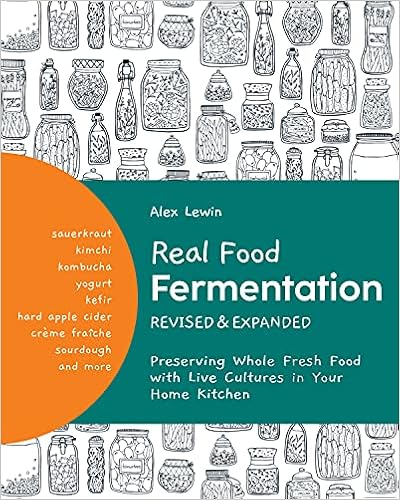
- full-fat, raw and/or fermented dairy (yogurt, crème fraiche, kefir, buttermilk, etc.)
- lacto-fermented vegetables (lacto-fermented types of sauerkraut, pickles, relishes, salsas, and so on)
- pretty much anything else fermented
- broths from animal bones, fish bones, and shellfish
- soaked, sprouted, and fermented grains (including sourdough bread)
- vegetable and fruits
and that avoids:
- vegetable and seed oils, hydrogenated or not
- industrially-processed foods and ingredients of all kinds
- white sugar
- unfermented soy, and soy of any kind in large amounts (eg., soy milk)
- white flour and whole wheat flour (unless soaked, sprouted, or fermented)
(to be continued)