Wednesday, December 2, 2009

Downtown Crossing Holiday Market


If you are in Boston this season, you can visit the Downtown Crossing Holiday Market, located (in a big tent!) on Summer Street at Downtown Crossing from now through December 24th. Hours are Monday through Saturday 11AM-7PM and Sunday 12PM-6PM.

Why visit?

There are farmers and food producers offering a variety of excellent food and horticultural goods, including great local vegetables and fruits from Keown Orchards, delicious breads from When Pigs Fly, fabulous lillies from Stow Greenhouses, and one-of-a-kind Dessert Hummus from Crazy Camel. There are also booths selling the other sorts of things you might expect at a holiday market, including jewelry, pottery, candles, and the like.

The vendor I was most excited to see was Stillman's, a leading Massachusetts purveyor of Meat Of Known Origin (MOKO). Stillman's will be at the market five days a week, Wednesday through Sunday, until December 24th.

So it will be easier than ever to get Meat Of Known Origin in Boston this holiday season!

Note: The Downtown Crossing Holiday Market is being run by the Boston Public Market Association, in coordination with the Boston Redevelopment Authority. I am on the board of the BPMA. I don't benefit personally from any money you might spend at the Holiday Market.


Imagine if there were an indoor, year-round, seven-days-a-week local food market serving the Boston area, so that farmers and food producers like Stillman's, Keown, and Stow could easily sell their products directly to their customers.

I think this would be great, for many reasons. Here are a few: Greater availability of real food could increase the health and happiness of folks in the Boston area; it could also attract more good restaurants to the Boston area. A year-round market would make it easier for buyers to find what they needed, and easier for sellers to predict demand.  Cutting out the intermediaries would allow food producers to build relationships with their customers, sell at a better price, and take home more money for themselves. And so on.

The Boston Public Market Association's goal is to create such a market. If this vision appeals to you, please support us.

Tuesday, December 1, 2009

Slow Food BU Sauerkraut Workshop Recap

Elizabeth Jarrard of Slow Food BU posted this fun, informative, and impressively thorough recap of the sauerkraut workshop I held at BU two weeks ago:

http://dontwhitesugarcoatit.blogspot.com/2009/11/krautin.html

Awesome photos by Rachel Offerdahl, including my favorite, the "money shot":


Where To Find Raw Milk In Italy

R6Q9QGW9KXVV
This web site:

http://www.milkmaps.com/

shows 1352 locations where you can get raw milk in Italy. The locations are pretty well distributed across every region of the country, including the southern islands of Sicily and Sardinia, with a much higher concentration of raw milk sources in the north.

(It's certainly available from numerous other sources that do not appear on this site, too—small farms and the like.)

Thursday, November 26, 2009

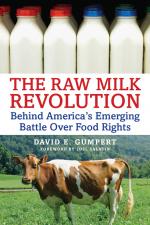
Book Review: The Raw Milk Revolution, by David E. Gumpert


I just finished reading The Raw Milk Revolution, by David E. Gumpert (full title: The Raw Milk Revolution: Behind America's Emerging Battle Over Food Rights). I recommend it to anyone who is interested in raw milk; in the viability of small-scale farming in the US today; and, most broadly, in the balance between individual rights on the one hand, and the state's role in protecting public health on the other—civil liberties, really.

Gumpert tells the stories of a few specific clashes of raw milk producers with regulatory agencies, and of a few specific pieces of legislation. By shifting his focus among these cases with excellent dramatic timing, he has given his book a bit of the flavor of an episode of Law and Order, leaving us on the edge of our seats as he switches from one thread to the next. Thus he has succeeded in writing an engaging, almost titillating, book about raw milk practice and policy.

His bias, which he makes no effort to hide, is in favor of due process and Constitutionally-guaranteed individual liberties, and against overreaching government agencies, unaccountable bureaucrats, and thug-like police and federal agents. Although he believes, for political and philosophical reasons, that people should have access to raw milk, he remains even-handed in his reporting; he is able to explore the actions, motivations, and inconsistencies of both camps, which is why his book is a valuable document, and not a screed.

He makes many astute observations over the course of the book. The first is one I've made before: that personal accounts of the effects of food on health are often discounted as being anecdotal, but in fact can be more revealing and meaningful than scientific studies. For instance, if someone tells me that they used to have asthma, and that when they started drinking raw milk it went away, and that whenever they stop drinking raw milk it comes back, this might mean more to me than a study of rates of asthma and raw milk consumption over time in a large population, where I gain little or no information about who exactly had asthma and who drank raw milk.

Another observation he made was of the profoundly different ways that different people look at health, illness, food, treatment, and pharmaceuticals. In the below excerpt, he is interviewing a California regulator, on the condition of anonymity:
[His question to the regulator:] What about the studies indicating that children who consume raw milk have fewer chronic health problems, such as the recent major European study suggesting that raw milk reduces the incidence of asthma in children? The response: "Isn't it better to go to your doctor and get asthma medicine than to take the risk of drinking raw milk?"
It is hard to know how to span the gulf between people who seek the keys to health on the one hand, and people who would always rather seek treatment on the other.

The tension that lies at the root of the raw milk debate, and indeed at the root of many debates these days, is the following: In the absence of conclusive, overwhelming evidence one way or the other, should the default stance of government be to permit, or to prohibit? On this question, I am quite clear where I stand.

Wednesday, November 25, 2009

Killing Chickens

A few months ago, I tried to kill some chickens, but failed.

How's that? Did the chickens get the better of me? Did they run away? Did I have a last-minute change of heart?

None of the above. I showed up at Pete and Jen's Backyard Birds for the 11AM shift on one of their slaughter days, and the birds had all been slaughtered by the time I got there. So instead of killing chickens, I spent a few hours sorting hearts and livers into plastic containers, along with the occasional kidney, while keeping a keen eye out for gall bladders, which, if punctured or crushed, could ruin whatever meat they came into contact with.

I was reminded of this experience because I just read an article by Jennifer Reese, The Tipsy Baker, entitled What I Learned When I Killed A Chicken (with some great photos, linked here). It describes what happened when she bought some chicks to be layers, and one of them grew up to be a rooster, which she decided to eat. She does not experience any kind of spiritual revelation as a result of killing her own meat. Perhaps I was hoping she would.

When I eventually succeed in killing a chicken, I'll certainly share my thoughts.