Showing posts with label Sandor Ellix Katz. Show all posts

Friday, July 11, 2014

Upcoming Events: Farm to Fermentation Festival, WAPF Massachusetts Conference, Boston Fermentation Festival

I have three very exciting speaking engagements coming up this summer and fall.


First, on August 24, is the Farm to Fermentation Festival, an annual event in Santa Rosa, California, 60 miles north of San Francisco. I believe it was at this festival a few years ago that Michael Pollan and Sandor Katz started talking about working together, which laid the groundwork for Pollan's book, "Cooked". Who knows what propitious meetings might occur this year?

I'd encourage SF Bay Area folks interested in pickles, cheese, or beer to come to this event. (Doesn't that cover just about everyone?) I can't wait for the "Cheese and Beverage Pairing" talk, myself. The whole event will be fun and educational. Here's the lineup of speakers. If you use the special discount code "pickle", you can save $5 off admission.


Next, on September 20, I will be speaking at the the Weston A. Price Foundation Massachusetts regional conference in Southbridge, 60 miles west of Boston. For anyone who has been to a WAPF conference, you know how awesome the conferences are. And for anyone who hasn't, you have something great to look forward to. And the food is the best conference food you will ever find.


Finally, on September 27 in Boston, I will be speaking at the Boston Fermentation Festival. Last year's Festival was a real coming-together of the Boston fermenting community, bringing in more than 1000 people over the course of the day. This year should be even more popular and awesome. Sandor Katz is headlining. I'm thrilled to be a part of it!

Please post in the comments section if you have any questions.

Thursday, June 14, 2012

Fermentation In The News: Sandor Katz On NPR

Sandor Katz, grand-daddy of the modern fermentation revival, author of Wild Fermentation, and one of my inspirations in my fermentation work and in my life, was on NPR yesterday talking about fermentation and his new book, The Art of Fermentation. The segment was entitled: 'Fermentation': When Food Goes Bad But Stays Good.

Hah!

I am glad that fermentation is getting mainstream airtime. The more people hear about it, the better for everyone.

Sandor's book, The Art of Fermentation, is a masterwork on the subject of fermentation: how to do it, why, history, philosophy, biochemistry—everything. It is ideal for folks who want to know as much as possible about fermentation and fermented foods, who are already actively fermenting things, or who are not afraid of jumping in with both feet.

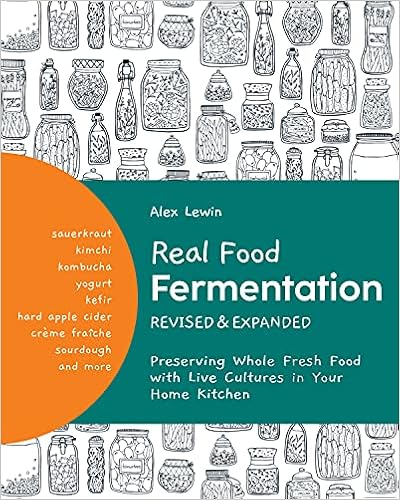
My book, Real Food Fermentation, is better suited to folks who want to get started with simple fermenting recipes in their home kitchens, who prefer something closer to a more typical cookbook format, and who want a beautiful book with pictures that make the food come alive. I will add that the first 60 pages of my book aren't recipes—they are a discussion of food preserving in general, "real food", sustainability, health, how to choose ingredients, what kitchen equipment to get, and other topics.

Buy one, buy the other, or buy them both!

(If you are buying my book, please consider buying it this coming Monday, June 18, to spike its popularity on Amazon!)

(And in either case, please consider buying from a local independent bookstore rather than online. If we stop buying books from local bookstores, they will all go out of business, and we will be sorry.)

Monday, February 14, 2011

Freestone Fermentation Festival: Joining Culture with Agriculture

Calling all fermentation fanciers: Check out the Freestone Fermentation Festival. It's happening on May 21 in Sonoma County, north of San Francisco. Ninth-degree fermentation black belt Sandor Katz will be there (as will I).

I'm looking forward to it!

Monday, May 11, 2009

Sandor Ellix Katz: Fermentation Workshop

Sandor Ellix Katz hosted a fermentation workshop on Friday, 8 May 2009, as part of the Boston University Future of Food conference. Here are my notes from that workshop, rearranged a bit, with some interpolation.

Sandor is the author of Wild Fermentation and The Revolution Will Not Be Microwaved, and is a self-declared “fermentation revivalist”. The Revolution Will Not Be Microwaved has influenced my own thinking about food and food systems more profoundly than anything else I’ve read or seen; each page is better and more fascinating than the last, and the book is a masterful blending of intimacy and rigor. Many of the concepts in the book landed so well and deeply in my brain that I can no longer remember how I looked at things before I read the book.


In the workshop, Sandor described fermentation, for our purposes, as the transformative action of microorganisms. He points out that fermentation is very easy to achieve, and we are all familiar with it: it is the path of least resistance for a piece of cabbage left out on the counter, for instance.

So if your goal is to ferment a cabbage into a puddle of slime, you don’t need to do anything in particular. If, on the other hand, you seek something edible, you must employ some art. This art is the deliberate manipulation of environmental conditions to favor desired microorganisms—conscious fermentation, if you will.

He made a further distinction between cultured fermentation, which involves the intentional introduction of microbes for the purposes of fermentation; and wild fermentation, which relies on whatever microbes may already be present on your vegetables and in your air, and sometimes a pinch of serendipity. Adding some of your old yogurt to milk in order to make a new batch of yogurt, is an example of cultured fermentation. Chopping up cabbage, salting it, and leaving it to its own devices is an example of wild fermentation.

Historically, the need to preserve food has led people to ferment food, including vegetables (sauerkraut and friends), dairy products (yogurt-type things, cheese, sour cream, some kinds of butter), grain products (bread, porridges, and some alcoholic brews), and meats (sausages, hams).

Since the 19th century, canning, refrigeration, and freezing have emerged as alternative methods of food preservation. They are convenient in some respects, but nutritionally speaking, they are a step backwards from fermentation.

Refrigeration and freezing do not increase food nutritiousness, and can degrade it slightly; canning degrades it significantly. Canning uses heat to kill any bacteria present in the food, and while this gives canned food a potentially very long shelf life, it also reduces heat-sensitive vitamins like C and some of the Bs, along with enzymes. In some sense, canning is the opposite of fermentation, since canning involves eliminating bacteria entirely, while fermentation involves guiding and benefiting from the work of the bacteria.

Fermentation can enhance the nutritional value of food, often in ways that we are only now beginning to understand. Among the potentially healthful compounds created via fermentation are B-vitamins; isothiocyanates (possible carcinogenesis inhibitors); dipicolinic acid (which may help in the elimination of heavy metals from the body); and nattokinase (which may counteract cardiovascular disease and Alzheimer’s). The fermentation bacteria themselves aid digestion and the immune system.

Beyond that, fermentation can be used to make water drinkable, by shifting its bacterial balance and introducing small amounts of alcohol. Similarly, fermentation allows us to eat foods that would otherwise be problematic; for instance, eating a big pot of soybeans leads to serious indigestion, but soy is easy to digest in its fermented forms like miso, soy sauce, natto, tempeh, and fermented tofu. Furthermore, fermentation can break proteins into their constituent amino acids, increasing their usefulness to our bodies. Fermentation can transmogrify lactose, which many people cannot digest. And fermentation can make minerals more bioavailable.


Sandor talked about raw (unpasteurized) milk. An interesting note is that pasteurization was originally developed for the commercial wine-making industry. The old way of making wine was to juice the grapes and hope for the best; the new way was to juice the grapes, sterilize the juice, and then add specific yeasts, in order to have control over the direction of its fermentation.

Sandor characterized milk pasteurization as “an excellent salvage protocol for milk from animals raised under substandard conditions”—animals feeding on inappropriate diets, standing knee-deep in their own excrement, and/or forced to overproduce milk by means of artificial hormones. That describes most of the cows in the US.

Wendell Berry, noted poet-farmer, spoke of the correlations between the modernization of agriculture and the deterioration of society.


Sandor observed that along with the War on Terror and the War on Drugs, we are waging another war that is seldom explicitly named—the War on Bacteria. The battlefields range from our (antibacterial) handsoap to our (antibacterial) socks to our cows (injected with antibiotics) to our (pasteurized) milk. It is a war that we can’t possibly win; and if we did win it, we would be in trouble. In the meantime, we are being hoisted by our own petard. We are selectively breeding harmful new bacteria, harming our own bodies, and destroying our planet.


There are a surprising number of fermented foods we sometimes forget are fermented. Sandor invited us to imagine a stroll through Zabar’s, the famous gourmet deli in New York City. Olives, (most) cheeses, sausages, corned beef, pastrami, ham, pickles, sauerkraut, and so on are fermented. We don’t usually think of bread as being a fermented food, but without the activity of yeast, bread would not be bread. Coffee, (most) tea, chocolate, and vanilla depend on fermentation. Most of the condiments we know and love, from ketchup to vinegar to Worcestershire sauce to fish sauce, also rely on fermentation in one way or another.

Fermentation has in fact always accompanied culture and agriculture. Some of the earliest human writings have mentioned fermentation—hence it is likely that fermentation dates back to prehistory. And more recently, fermented foods have played key roles in specific cultures.

Fish sauce has been used in Asia for millennia, and was used in ancient Rome, where it was so important that it was used as a form of currency (garum).

The original kefir grains, legend has it, were brought from Allah to humankind by Mohamed.

Other culture-specific ferments can provide a test to distinguish insiders from outsiders—or, at the very least, are acquired tastes. Natto, for instance, is a trademark Japanese soy ferment that is stringy, slimy, smelly, and notoriously unappealing to most non-Japanese. Iceland has hákarl, a fermented shark preparation that I will charitably describe as “pungent”. More than one group of people has a beverage made by chewing a plant, spitting the chewed plant and saliva into a large vessel, and leaving it all to ferment.

In his volume The Raw and the Cooked, the French anthropologist Claude Lévi-Strauss distinguishes among raw food, rotten food, and “cooked” food (including fermented food), and characterizes cooked food as the triumph of the human over the rotten.


Enough theory. Time to ferment!

After noting that English does not have its own word for “fermented vegetables” and settling on the borrowed German word sauerkraut, Sandor demonstrated his method:
  1. Chop up your vegetables. Use cabbage, carrots, onion, whatever. You can use anything you would consider eating raw (so no potatoes). You can use herbs and spices if you like.

  2. Add salt. In his book, he suggests 3 tablespoons of salt for 5 pounds of cabbage. He emphasizes that this is not a prescription, just a possibility. According to Sandor, commercial sauerkraut operations use between 1.5% and 2.5% salt, by weight. The salts in my cabinet right now range from 10g/T (for kosher salt) to 18g/T (for coarse sea salt). Doing the math, 30-54 grams of salt for 2300 grams of cabbage puts us in the 1.5%-2.5% range.

    The salt pulls the water out of the vegetables, via osmosis; narrows the variety of bacteria that can grow, favoring lactic acid bacteria; slows down the action of all the bacteria, including the lactic acid bacteria; and makes the vegetables crunchier by hardening the pectins they contain.

  3. Mix it all, and squeeze it with your hands. The squeezing accomplishes two things: it helps the salt pull the water out of the cells in the vegetables, and it softens up the vegetable fibers a bit.

  4. Pack it tightly into pint-jars. Use your hand or some other instrument to push it down so that the liquid rises above the top of the vegetables, to forestall surface mold (by “drowning” it).

  5. Leave the jars out at room temperature for as long or as short a time as you like. Every day or so, open the jars and push down on your kraut so that the liquid rises (again, to prevent mold).
If mold grows on it, skim it off.

Taste your sauerkraut regularly, and eat it whenever you think it’s ready!

Sauerkraut is a good choice for a first fermentation project—it is easy, it is satisfying, it is delicious, it has a high success rate, and it doesn’t require any special equipment.


Sandor was signing copies of Wild Fermentation at the workshop. If you are interested in fermenting food, I definitely recommend this book—even if you can’t get it signed!

You can also visit his website at http://www.wildfermentation.com/.

As a final note, Sandor encouraged us to consider that fermentation is a great activity for farmers and food artisans, allowing them to take inexpensive, perishable raw materials (cabbage, milk) and transform them into more expensive, more durable products, while at the same time building the local economy and increasing local food security and self-reliance.

Friday, March 6, 2009

Future of Food conference at Boston University, May 8-9

On May 8-9, 2009, Boston University is hosting a conference entitled The Future of Food: Transatlantic Perspectives featuring a rousing roster of speakers, film screenings, meals, and opportunities to meet fascinating people, including Sandor Ellix Katz, international fermentation expert and author of my favorite book, The Revolution Will Not Be Microwaved! Cost: probably free Conference URL: http://www.bu.edu/euforyou/IHS/upcoming.html#May9 And if that's not fantastic enough: there are rumors that Sandor Ellix Katz will be giving a fermentation workshop during the day on May 9. Here's from the site:
We are organizing this conference in response to the growing concerns of local communities in the United States and Europe over matters of health, the environment, and the economy. The conference takes the growing global food crisis as a starting point and asks key stakeholders to imagine a different future. Our working hypothesis is that the current food crisis is systemic in nature and solutions from the past (more market, more regulation, etc.) will not allow the global food system to evolve in a sustainable way. The situation calls for innovations in infrastructure and re-thinking how food is grown, shipped, and distributed locally, regionally, and globally. How can we foster a global food system that safeguards cultural and biodiversity while providing safe and nourishing food for all citizens?

Wednesday, February 25, 2009

The Fourfold Path to Healing Conference, part 3: Milk: The Raw Story

Let's talk about raw milk. The "experts" have told us confidently that raw (unpasteurized) milk is bad. Just like they've told us confidently that butter is bad, and margarine is good...um, I mean, bad. (They change their minds every so often.) So what is the real story of raw milk? The short version: Once upon a time, all milk was "raw milk". That's how it comes out of mammals. As the industrial revolution surged forwards, and milk started to be produced on an industrial scale, it became uneconomical for large dairy conglomerates to maintain hygienic conditions. So they stopped trying. After selling unhygienic milk for a while, sickening and killing people, they decided to start pasteurizing their milk to kill off pathogens. Due to their political clout, they were able to convince governments and the medical establishment to support compulsory pasteurization for all milk producers. This put all dairies, large and small, on basically an even footing. So what's the problem? Who needs raw milk, anyway?
  • First of all, nowadays, it is now quite easy and practical to deliver healthy raw milk from animals to consumers.
  • Raw milk contains vitamins, enzymes, and other bioactive components destroyed by pasteurization which are very likely to confer benefits to the immune, reproductive, and digestive systems [reference]. (Lactase is one example. Lactase is the enzyme necessary for the digestion of lactose, a component of milk. Roughly 75% of adults worldwide [reference] are not able to produce adequate lactase on their own. Thus, for most people in the world, raw milk is more digestible than pasteurized milk.)
  • Raw milk contains a dynamic balance of bacteria that actually makes it less prone to spoiling than the sterile pasteurized milk, which is like an unpeopled frontier waiting to be overrun.
  • Because of this balance of bacteria, raw milk is more versatile when making cultured milk products (cheese, yogurt, kefir, etc.).
  • etc.
For more of the story, visit http://realmilk.org/. In particular, check out the various reports they have linked there. I don't normally recommend or even condone the use of Microsoft PowerPoint, but it's worth it to view this excellent and well-researched presentation. See also: Nourishing Traditions, by Sally Fallon; The Revolution Will Not Be Microwaved, by Sandor Ellix Katz; and Milk: The Surprising Story of Milk Through the Ages, by Anne Mendelson. The "raw milkists" don't want to take away anyone's right to drink pasteurized milk. They simply want everyone to have access to healthy raw milk, and to unbiased information about it. Is that so much to ask?

Thursday, January 29, 2009

Sally Fallon

I just got home from the Haley House Bakery Café in Roxbury (Boston), where I attended a dinner to benefit their Youth Cooking Program, a fabulous program that helps teens learn to cook and to broaden their outlook on the world. To quote the website:
Food can teach us to overcome resistance and negativity to something new (which is our inclination) by yielding to exploration or curiosity so that the truth can reveal itself…Learning to overcome pre-conceptions of unfamiliar foods and dishes through cooking is an excellent tool in learning how to overcome or shed resistance and prejudice in other parts of one's life.
Fabulous as that program may be, what got me there tonight was not this program, but the speaker, Sally Fallon. Every so often, I have an experience that fundamentally changes how I look at some part of the world. Reading Sally Fallon's first book, Nourishing Traditions, was such an experience for me. "The Cookbook that Challenges Politically Correct Nutrition and the Diet Dictocrats," says the front cover. In it, she claims that much of what the "experts" tell us about nutrition is wrong. Vegetable oils are bad—animal fats are good—pasteurization is bad—meat is necessary—and more. One giant difference between her book and any of the "diet" books of the last 20 years is that her arguments are airtight and backed up by copious unimpeachable references. Perhaps even more importantly, her ideas simply MAKE SENSE and ring true, in a way that the claims of the one-trick-pony diet books really don't. And what she describes is not a "diet" in the modern, punitive sense of the word, but rather a way of eating. I recommend her book to everyone who will listen. Are you listening? (I learned about her book when I read The Revolution Will Not Be Microwaved by Sandor Ellix Katz, another great book about food, another book that catalyzed a fundamental change for me.)
I had arrived at the dinner early, and taken a seat at the table closest to the microphone, so that I wouldn't miss any of the action. I was very pleased when Sally Fallon and two of her cohorts joined me at my table for dinner. SF is the president of the Weston A. Price Foundation, and her cohorts are leaders of local chapters of the same foundation. (Weston Price was a health researcher in the first part of the 20th century whose work provided a starting point for Sally Fallon's. In creating his masterwork, Nutrition and Physical Degeneration, after visiting hundreds of cities in fourteen countries, Weston Price found that groups of people eating "traditional" diets were healthy, and those same groups of people eating "modern" diets were not. Obviously the story is much longer, but that is the gist of it.) Our dinner conversation centered around the day's business: Sally's book, nutrition, food-related problems in the world, etc. We spend some time on the subject of raw milk, and came to the subject of the trial of Michael Schmidt in Canada for the crime of selling raw milk. One of us, perhaps I, had the idea of starting a religion that required the consumption of raw milk, as a defense against some of the legal impediments to the production and distribution of raw milk. SF thought that this was a great idea, and that I should do it. And in fact, when later during the night I asked her to sign my copy of her book, she said she would do it on the condition that I start a religion that required consuming raw milk. After thinking about it a little bit, I agreed. After all, I am already an ordained minister; it is only fitting that I have a religion; and it should certainly have something to do with food.